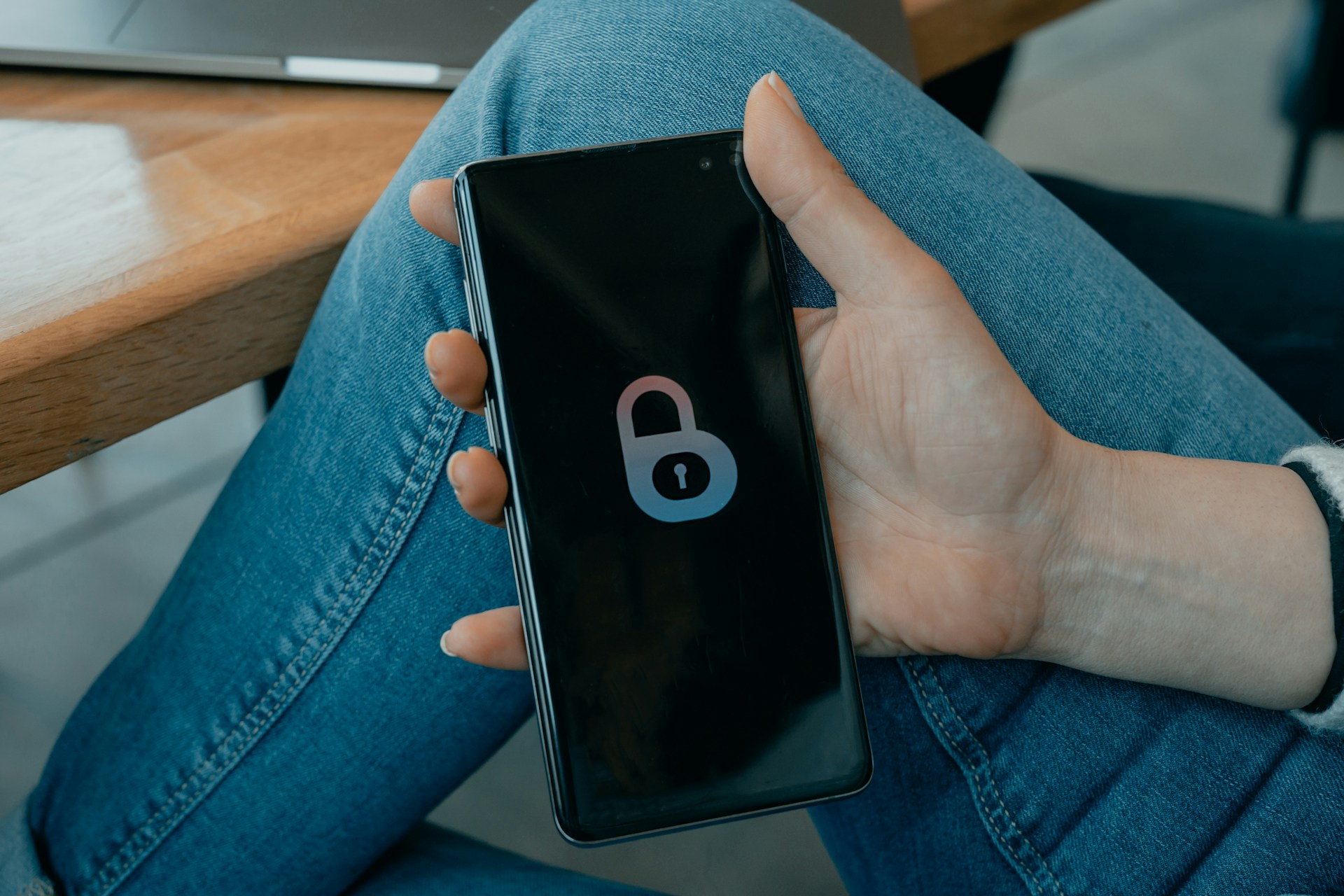
How to Unlock a Deceased Parent’s Phone
Why it’s so difficult and how to avoid this situation
When a parent passes away, their loved ones often have to handle numerous administrative, personal, and family matters. Among the difficulties they don’t always think of is accessing their mobile phone.
Today, a smartphone can contain a large part of a person’s digital life: photos, contacts, messages, email addresses, apps, documents, online accounts, social media, banking information, and subscriptions. However, when the phone’s owner is gone, the device can remain completely inaccessible.
The problem is simple: knowing the person and being a relative is generally not enough to unlock their phone.
Why is it difficult to unlock a deceased relative’s phone?
Modern smartphones are designed to protect their users, including against unauthorized access after death.
A PIN, password, or other lock method protects access to the data stored on the device. Depending on the model and settings, data may also be protected by encryption tied to the lock mechanism.
Therefore, knowing the owner’s email address, their name, or even presenting a death certificate is not necessarily enough to obtain the unlock code.
Manufacturers intentionally place limits on these procedures. Their goal is to prevent someone from accessing a user’s private data simply by claiming to be a family member.
The PIN problem
The phone’s PIN is personal. In many cases, the manufacturer cannot simply provide this code to a relative. Repeatedly guessing is also a bad idea. Mobile devices may impose increasingly long delays after multiple errors, and some security mechanisms can lead to data erasure after a significant number of attempts.
It is therefore inadvisable to try to bypass the lock or use methods found online that claim to “crack” the code.
What if the phone contains essential information?
This is often when the situation becomes particularly complicated.
The phone may be needed to find:
- contact details for certain relatives;
- personal photographs;
- important conversations;
- email accounts;
- subscription information;
- social media accounts;
- documents or files stored locally;
- information identifying certain services used by the deceased.
In some cases, relatives may even know these accounts exist without knowing how to access them.
The phone then becomes a kind of digital safe… but the key stayed with its owner.
Online accounts pose another problem
Even when a relative manages to recover certain documents or information, the question of digital accounts remains.
An email address may be protected by a password and two-factor authentication. A social network may also require confirmation from an already recognized device. A password manager may itself be protected by a master password and additional authentication.
In other words, the phone is often just one door among several.
This is why waiting until death to try to reconstruct a person’s entire digital life can become extremely difficult.
The solution: prepare your digital life in advance with Asfaly
It is precisely to address this problem that a service like Asfaly makes sense. Asfaly’s goal is not to bypass a phone’s lock or to allow someone to force access to a device.
The approach is different: prepare, before death, the information you wish to pass on after your death.
The user can store in their digital vault the information they wish to leave to their loved ones or a trusted person.
They can, for example, indicate:
- important email accounts;
- social media used;
- subscriptions;
- digital services;
- information for locating certain accounts;
- contact details for important people;
- information needed to facilitate certain procedures.
The principle is to prevent all this information from disappearing with the person or remaining locked behind a phone that no one can access.
Adaptation note: In the US, UK, and Canada, the legal frameworks differ. In the UK, the Digital Economy Act 2017 does not grant automatic access to a deceased person’s device. In the US, there is no federal digital inheritance law; state laws (like the Revised Uniform Fiduciary Access to Digital Assets Act) vary, but device manufacturers (Apple, Google) still require a court order or prior legacy contact setup. In Canada, provincial laws govern, but the technical encryption barriers are identical.
Asfaly does not replace online services’ procedures
It is important to make a distinction. Asfaly does not automatically give access to a Google, Apple, Facebook, Instagram, Microsoft, or other service account. Each platform maintains its own rules regarding deceased persons’ accounts.
However, Asfaly allows the user to prepare and transmit the information they wish to leave, so that their loved ones know what steps to take and where to find the necessary elements.
The vault thus becomes a reference point for the deceased’s digital life.
Organized transmission rather than urgent searching
Without preparation, relatives may have to search for days or weeks:
- Who was their email provider?
- Did they have multiple email addresses?
- Which social media did they use?
- Did they have active subscriptions?
- Where are their important documents?
- Are there accounts no one knows about?
With advance preparation, the situation can be much simpler.
The person can decide for themselves what information they wish to transmit and identify the people who should be able to find it after their death.
The phone is no longer the only access point to one’s digital life
This is one of the main benefits of a solution like Asfaly. The phone can be lost, broken, locked, or inaccessible. Passwords may be unknown. Accounts may be protected by two-factor authentication.
But the information prepared in Asfaly is organized in a space specifically intended for its transmission under the conditions provided by the service.
The goal is therefore not to unlock the deceased’s phone at all costs.
The goal is to have prepared, before it is too late, what loved ones will need to know after death.
Anticipating to protect your loved ones
Preparing your digital life is not a process reserved for the elderly. We all have a significant digital presence today, sometimes spread across dozens of services.
A phone can disappear. A password can be forgotten. An account can be inaccessible. Authentication may require a device that is no longer available.
By preparing information in advance, everyone can decide what they wish to transmit, to whom, and under what circumstances.